| PEDRO REYES |
|
2013
|
||||||||||||||||||||||||||||||||||||
|
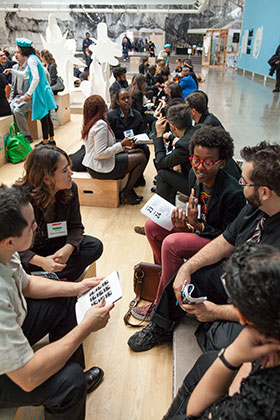
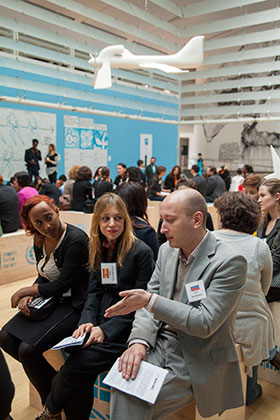
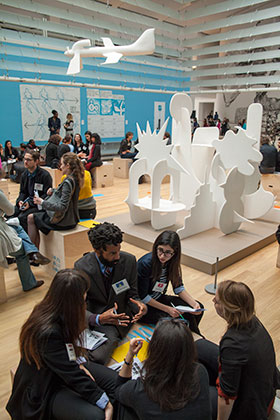
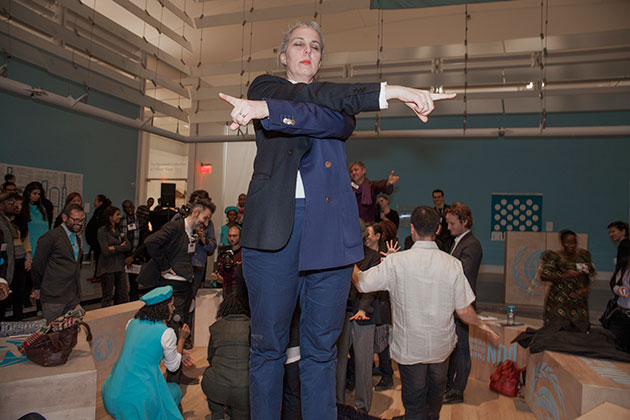
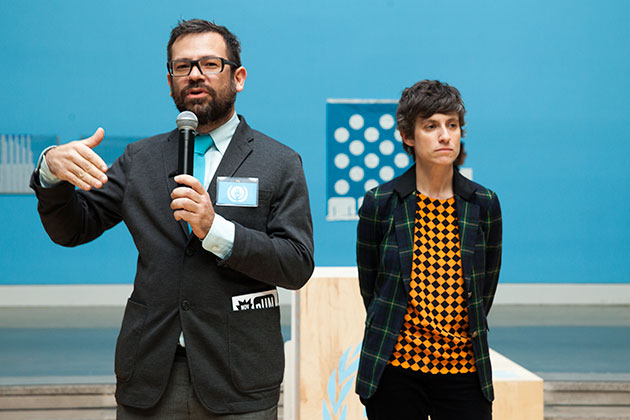
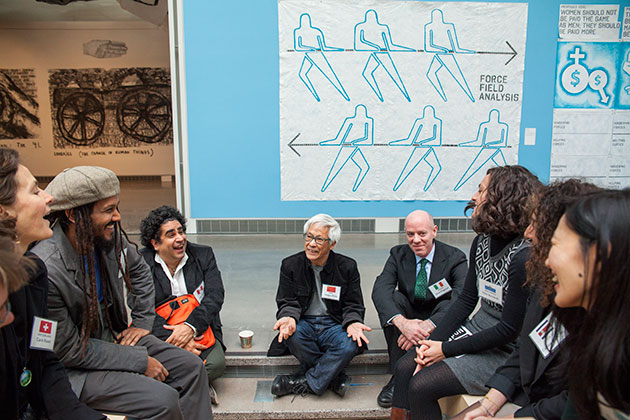
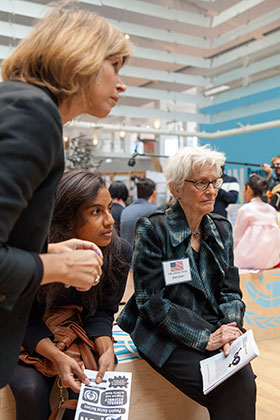
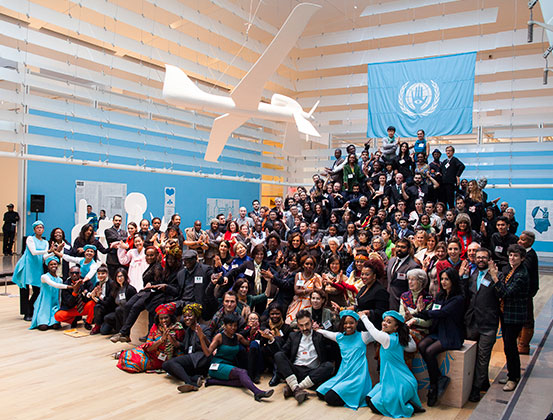
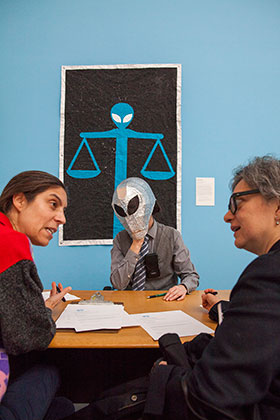
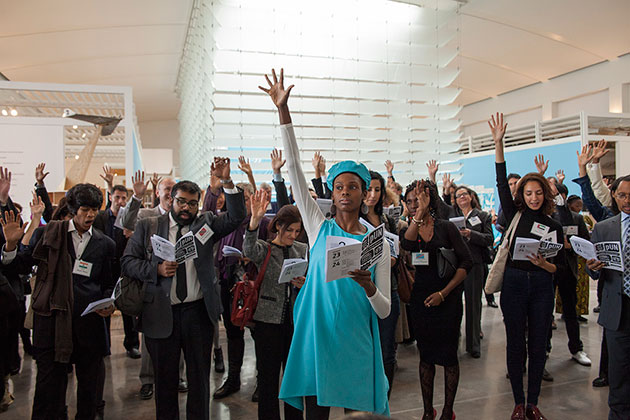
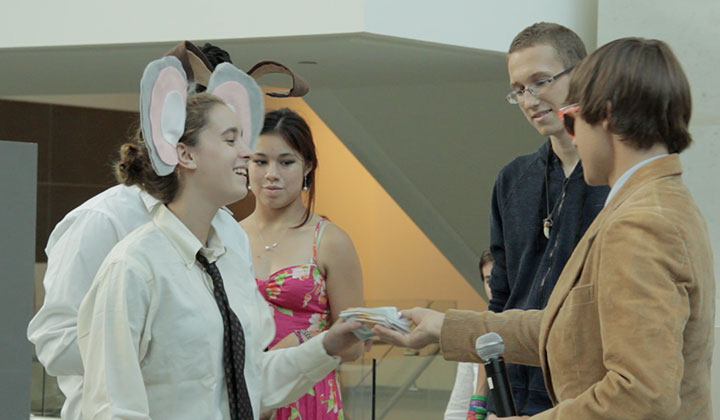
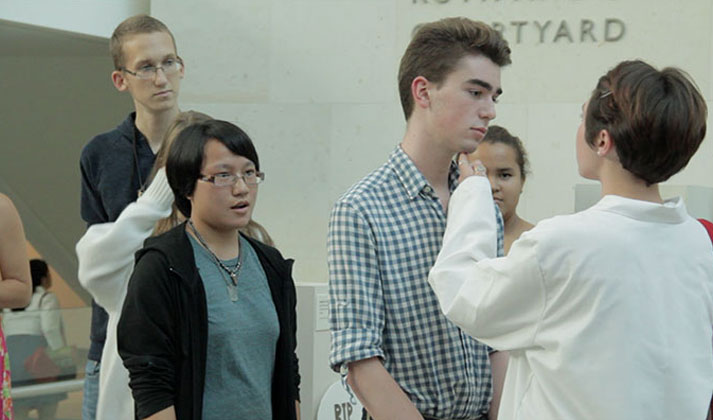
This is an experimental conference that seeks to apply techniques and resources from social psychology, theater, art, and conflict resolution to geopolitics. Unlike the real United Nations (UN), where delegates are appointed by states and are career diplomats, the people’s UN welcomes 193 regular citizens who live in the region and are connected by family ties or by birth to the nations represented at the UN.
This is an experimental conference that seeks to apply techniques and resources from social psychology, theater, art, and conflict resolution to geopolitics. Unlike the real United Nations (UN), where delegates are appointed by states and are career diplomats, the people’s UN welcomes 193 regular citizens who live in the region and are connected by family ties or by birth to the nations represented at the UN.
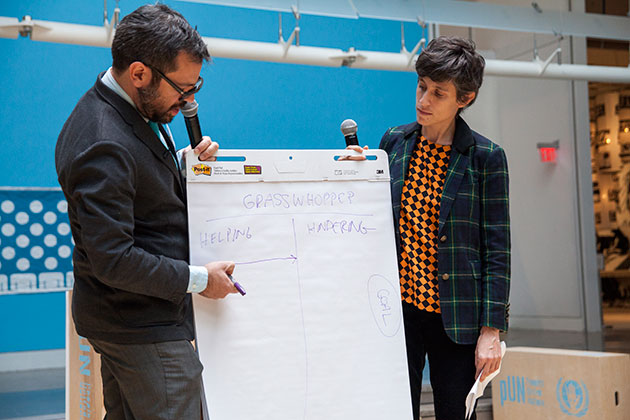
Over the course of a weekend, delegates represent their countries in group activities to grapple with a set of global proposals that seem to have come from the future, but which must be addressed in the present. Although the proposals are often presented using the language of science fiction, yet they are nothing but descriptions of the real issues at stake today. Rather a model version or a critique of the existing United Nations, pUN focuses on imagining a big encounter group. If pUN is a naïve role-play game, it is precisely the light-hearted spirit of play that will allow its participants to engage in subjects whose magnitude is otherwise overwhelming. |
||||||||||||||||||||||||||||||||||||
|
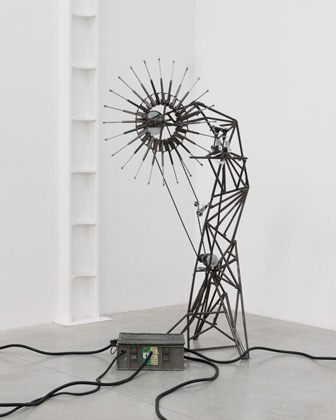
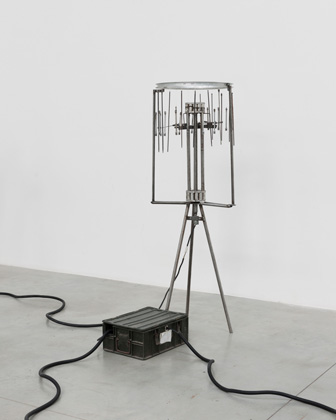
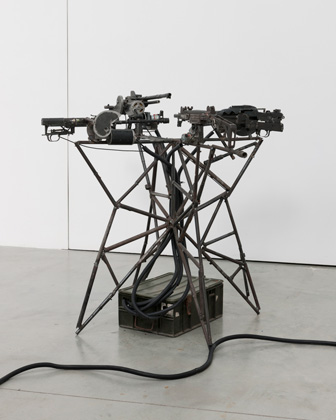
Instruments made from de-commissioned weapons
Lisson Gallery, London
2013
|
||||||||||||||||||||||||||||||||||||
|
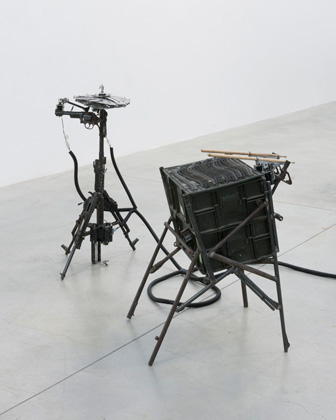
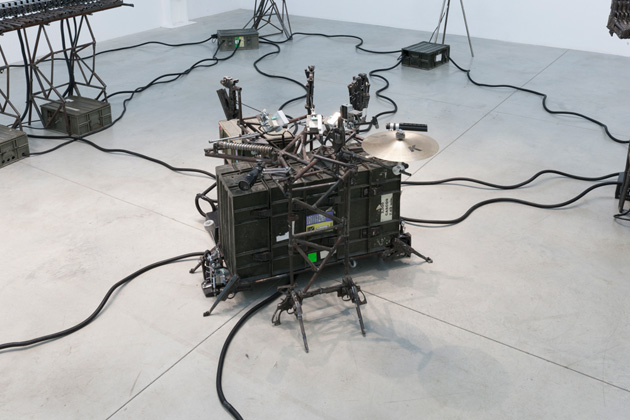
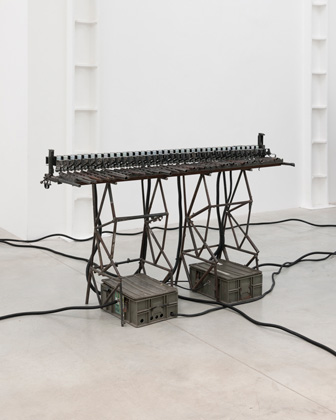
Disarm is a second generation of instruments built after Imagine (2012), also using the remnants of weapons that the Mexican army had collected and destroyed. The second series is made up of eight instruments that were created in collaboration with a team musicians and Cocolab, a media studio in Mexico City. These machines are mechanical musical instruments; they can be programmed and operated via computers, making them capable of performing music concerts with compositions prepared beforehand.
The various parts of these automatons are recognizable as shotguns, pistols and rifles; while they no longer pose the threat of physical harm, they keep the sheer might of their most recent purpose. Now, these former arms strum, ring, crash, hum, and vibrate at different volumes and intensities to express elaborate compositions with a wide range of sonic nuances.
Making art about guns, you can easily be seduced by the object itself, so the result may wind up praising or glorifying the object rather than critiquing it. Because of the pacifist purpose of this project, the message has to be clear so that the idea has currency for a general audience. A good example to mention here is that of Matsuo Bashô, the Edo period Japanese poet. One day, while walking through a field of dragonflies one of Bashô's students composed a haiku: Red dragonflies Remove their wings And they are pepper pods Bashô told his student that this was not a true haiku, correcting the poem thus: Red pepper pods Add wings And they are dragonflies For Basho, what constitutes a haiku is not only its technical construction, but also a moment of insight; when an object or image is seen in a new light or when something is added or revealed in a meaningful way. |
||||||||||||||||||||||||||||||||||||
|
2013
|
||||||||||||||||||||||||||||||||||||
|
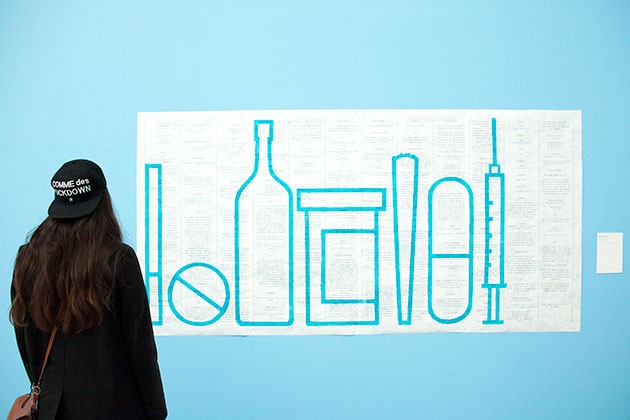
Pharmasphere stages an abridged history of the production, distribution and consumption of prescription and illegal drugs from prohibition times to the present day.
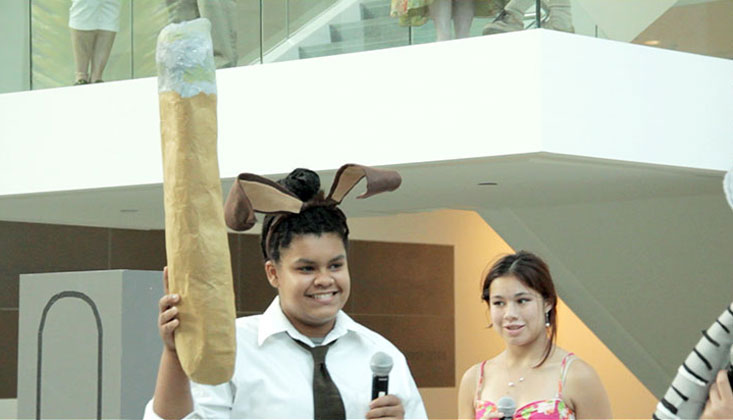
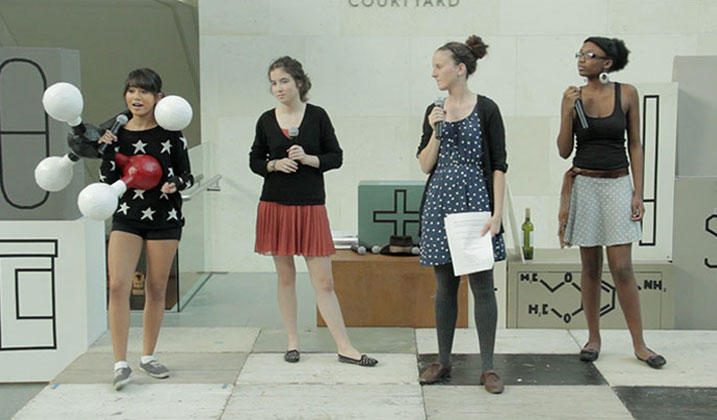
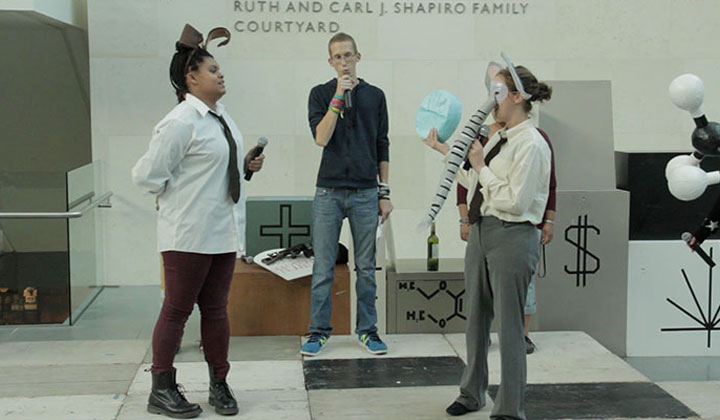
Pharmasphere stages an abridged history of the production, distribution and consumption of prescription and illegal drugs from prohibition times to the present day. Performers in the roles of farmers, gangsters, drug lords, politicians, soldiers, doctors and pharmacists demonstrate how the substances that we consume are produced, traded and consumed in as in a worldwide chemical clockwork. Using techniques developed by Brazilian theatre practitioner Agosto Boal in his consciousness-raising Theatre of the Oppressed, the audience participated in the creation of alternative scenarios. Trying to break the taboos enforced by the media, politicians and corporations, empowered audience members, or “spect-actors” help shape the narrative as it is performed, exploring new modes of confronting and working through the multifaceted war on drugs.
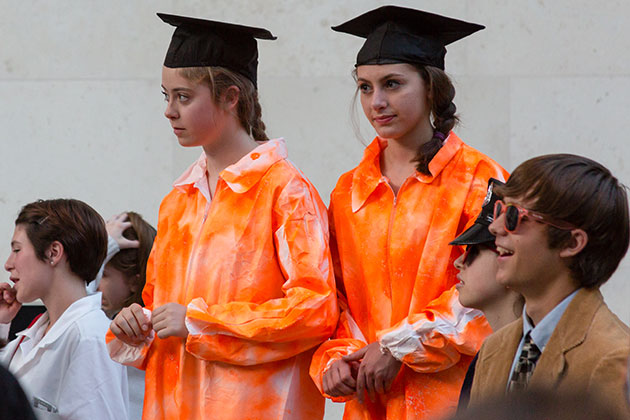
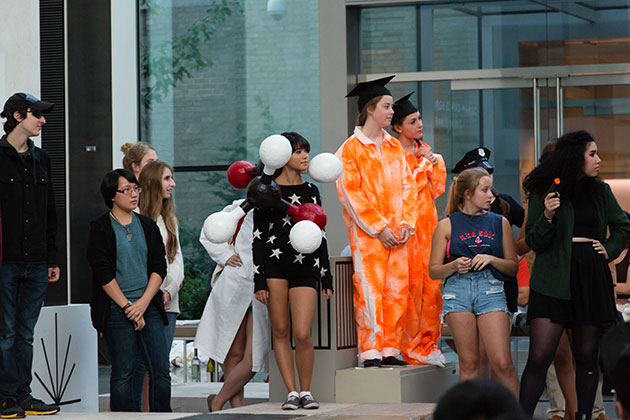
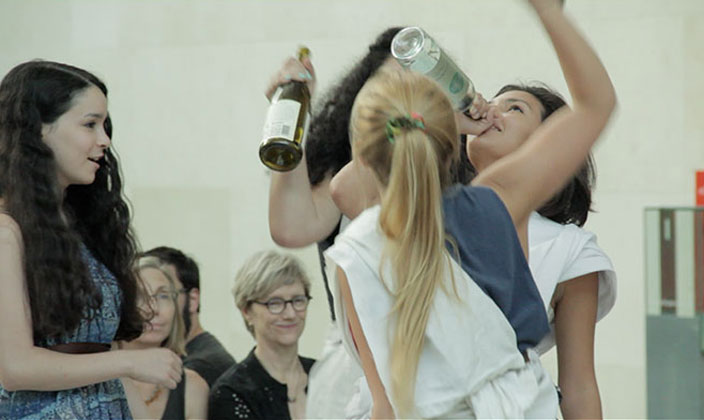
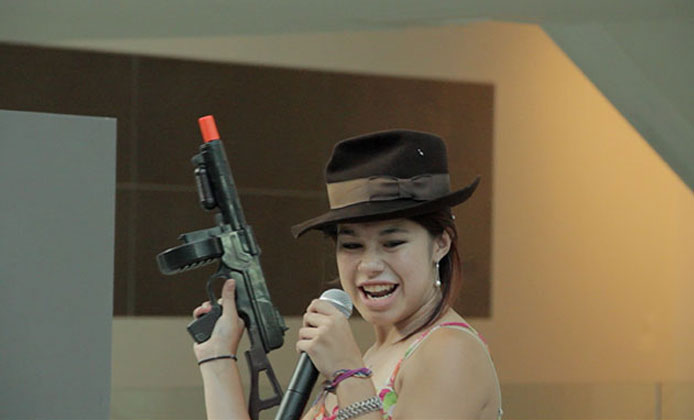
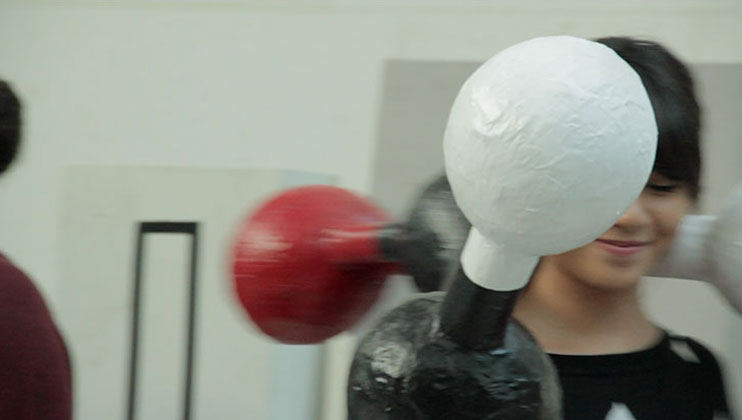
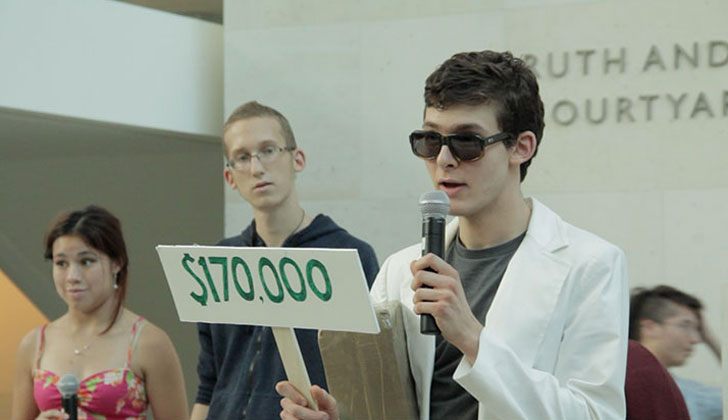
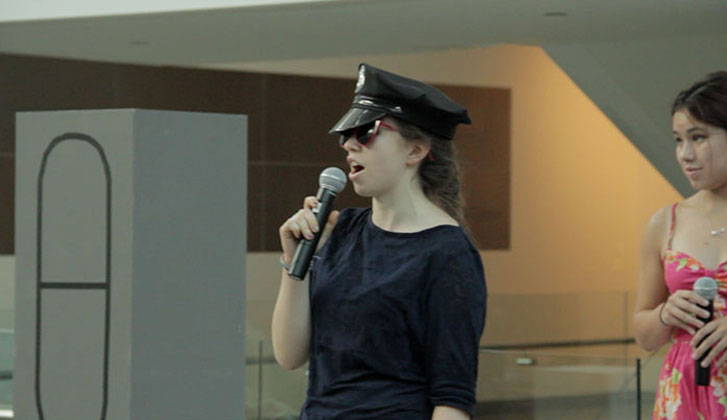
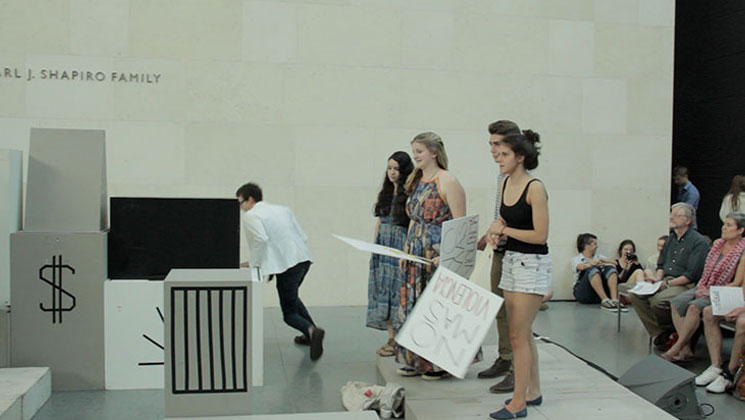
************ PHARMASPHERE ************ MC: (Loudly, addressing the four sides of the public) Welcome everyone. You are about to see a very peculiar play. It’s about drugs, violence, and international conspiracy. PRUDENCE: (Disapproving) These are not appropriate subjects to be presented by teens. SMART MOUTH: (Mocking) Oh it’s so embarrassing! MC: Let’s prepare the audience for the subject, starting with explaining what’s going on here on the stage. What you are about to see is a living diorama. We will stage some of the routes of drugs around the world, based on real facts. Yet we don’t know how the play is going to end. This is a particular method of theater called “Legislative Theater.” It’s used worldwide as a tool for conflict resolution. PRUDENCE: Would you please explain how it works? MC: Sure. Here on stage we’re going to act out relationships and small snapshots of issues related to the drug war and drugs as a health issue. MC: (Addressing the audience) At a certain point we may stop the play and ask for your help. SMART MOUTH: So what is the play about? MC: Like we said, it’s about the drug trade, the trade of all kinds of drugs. SMART MOUTH: And so what, exactly, is a drug? MC: (Showing a giant molecule) A drug is a chemical substance that modifies your brain activity. SMART MOUTH: Marijuana, cocaine, heroin, and so on... MC: Not only that. Also, alcohol and tobacco. And medicines. All kinds of prescription drugs. Whatever medicines you can get at the drugstore. PRUDENCE: In that case, we all use drugs! My grandma uses drugs, my parents use drugs, and I do, too! MC: Yes. Some drugs have medical uses and some others have recreational uses. But today, society tends to obsess over the use and trade of recreational drugs, while drugs with approved medical uses have become a massive economy of their own. Don’t get us wrong... pharmaceutical drugs do an incredible amount of good in the world. They are necessary in most cases. But they are also abused in increasing rates, and that abuse is what we want to talk about right now. Please bear with us here because we’re going to do something unusual. We’re going to look at drugs without emphasis on moral judgments. We want to see them from a sociological perspective. This will allow us a new approach on something we’re gonna call “The Pharmasphere.” SMART MOUTH: Pharma-what?? MC: The pharmasphere, which maps the production and consumption of all kinds of drugs on the planet. A kind of biological clockwork that runs on our addictions. PRUDENCE: The pharmasphere, like the biosphere? GREEK 1: Yes, but from the Greek pharmakon. A substance that can either cure you or kill you. (holds sign that says PHARMAKON in greek letters) MC: Since drugs can be dangerous, some of them have been made illegal, while others are legal. PRUDENCE: Of course. I mean, imagine all the people that die each year from using illegal drugs. Actually, how many is that? How many people dies cause of drugs? MC: In the US in 2010, the total number of people who died from drug overdoses was over 38,329. (holds a sign shaped like a tombstone reading: 38,329 deaths from drug overdoses) PRUDENCE: That many die from illegal drugs every year? MC: Nope! 43% of those deaths were caused by prescription drugs. (She pulls out a sign in the shape of a tombstone reading: 16,000 deaths from opiate-derived painkillers) (We see a line of 10 people, plus one more person a little off to the side, smoking a joint) For every one person that dies from taking illegal drugs, (Five people in the line fall over dead) Nearly as many people die from prescription drugs. (The other five fall over dead) Nope! 13,000 people died from the use of illegal drugs. The other overdoses are due to prescription drugs, in fact 16,000 people died from being addicted to opiate-derived painkillers, that’s more of the total number of deaths caused by heroine and cocaine. GUY SMOKING A JOINT: Don’t look at me! None of these deaths were caused by marijuana. More than the total combined number of deaths each year. (Tombstone sign: 440,000 deaths from tobacco-related disease) (34 or at least all available actors come on stage and drop dead) MC: Yet the United States still spends over $51 billion dollars every year on the drug war. And the burden on the legal and penal system is really high: in 2011, one and a half million people were arrested for nonviolent drug crimes. In fact, half of people in federal prisons in the United States are serving time for drug-related crimes. PRUDENCE: Well, how the hell did we get here? SMART MOUTH: (sarcastically) Watch your language, young lady! MC: That’s exactly what we’re here to explore! But remember that what we’re trying to do is to see this without moral judgment, we are going to from heroin and cocaine. And still less observe and understand what how we got than the number of people who die from alcohol abuse every year. (tombstone sign) MC: Remember that fact about how many people die from illegal versus prescription drugs every year? PRUDENCE: Oh goodness. Well what about deaths from marijuana? SMART MOUTH: Come on, you can’t die from OD’ing on weed! (To the MC) Do those numbers include tobacco and alcohol diseases? MC: That’s a great question. They don’t. Tobacco and alcohol which are legal regulated drugs, actually cause 450,000 deaths per year. So for every one person who dies for illegal drugs, two people will die for legal drugs and 34 people will die for the use of alcohol and tobacco. Tobacco-related diseases cause over 440,000 deaths in the US here and where we are, without moral judgments. SMART MOUTH: (to Prudence) Think you can handle that? PRUDENCE: (to Smart Mouth) How about we do it without sarcasm? Can you handle that? MC: So let’s talk about the pharmasphere over the past couple millennium. CLOCK: (holding sign reading 0 AD) Year Zero MC: Some of the planet’s population at this time used what we now consider drugs in their rituals and ceremonies. Things like tobacco, mushrooms and peyote were used in America. GREEK 1: Or a little earlier in Europe, the Oracle of Delphi was a priestess who inhaled gases that sent her into a trance in which she gave prophesies. (The Oracle, surrounded by three Greek males, inhales “gasses” –baby powder that makes a cloud of dust– and shouts a nonsensical prophesy) Ancient people also used substances for recreational purposes. They even designated gods for parties, like Bacchus, the god of wine. (Two of the greeks yell, “Chug! Chug! Chug!” like frat boys while one drinks from a bottle) CLOCK: (Holding sign reading 500-1500 AD) Moving on... MC: In medieval times, if anyone accidentally ingested a psychotropic plant, it was seen as a divine punishment. SMART MOUTH: So if you had a bad trip you were visited by demons, and a good trip meant you saw angels? MC: It was during that time... CLOCK: (holding sign that reads 1600 AD) Around 1600. MC: …that traders introduced the opium poppy to India and China. Opium was used for centuries in China as medicine before people started smoking it with tobacco. SMART MOUTH: Where did they learn to do that? MC: From the Europeans. PRUDENCE: What happened when people in China started smoking opium? MC: The beginning of the war on drugs. Ever heard of the Opium Wars? CLOCK: (sign reads 1830–1860) Mid-nineteenth century. CHINESE CHARACTER: The British Empire was allegedly the biggest drug dealer to date. Imagine the crops and labor from a place the size of India, a market the size of China, and they had the monopoly on a highly addictive substance. Any Chinese person was punished with death if they were caught trying to trade opium, according to a law made up to protect the monopoly. So the British Empire provided the Eastern Indian Company with its own army. So, after centuries of medical use, when people started using opium for pleasure, opium dens multiplied. For the British that meant more profits and greater influence in China, but the growing number of addicts and the growing power of Britain led the Emperor to try to stop this with an opium prohibition. SMART MOUTH: How did that go for him? CHINESE CHARACTER: Well… demand for opium went up 200 times in the first hundred years of the ban. PRUDENCE: So for every opium addict at the start of the ban, there were 200 more after a hundred years. MC: Something similar happened in United States history. CLOCK: (sign reads 1920) Entering the twentieth century. MC: There was a sweeping prohibition reform. No one was allowed to make, sell, or transport alcohol. SMART MOUTH: But that didn’t curb demand! PRUDENCE: This must be when the mob came in and built up a black market? (We see gangsters with tommy guns carrying crates of bottles) MC: Organized crime flourished. Violence escalated, but alcohol consumption continued to be widespread. CLOCK: (Sign says 1933) MC: This is when the ban on alcohol officially ended and selling booze became legal again. But there were other substances that were used by a very small group of scientists, artists, psychiatrists and curious explorers of the mind. While people from this time were addicted to drugs like morphine and cocaine, the numbers were quite low. Marijuana consumption was also low throughout the first half of the twentieth century. CLOCK: Moving on to 1943. MC: This year a Swiss scientist named Albert Hoffman made a casual discovery. ALBERT HOFFMAN: While trying to produce a series of compounds related to ergot alkaloids, I accidentally discovered lysergic acid, also known as LSD. I unintentionally ingested some and then rode my bicycle home from the lab. (Albert Hoffman rides bicycle around the stage, shouting “Wow!!! Wow!!! Wow!!!”) I never imagined that such a serendipitous discovery in my lab would have such a massive medical and cultural impact. People wanted to try it in all kinds of different contexts. At first it was used in medical environments in the search for a cure for schizophrenia. Later, the army and CIA experimented with it as a “truth serum.” But overall, the kids just loved it! CLOCK: It’s now 1971. MC: In reaction to how drug use grew in the sixties, President Nixon made drug reform a central part of his administration. He created a committee to make recommendations on how to curb drug consumption, but he threw out their findings, which called for policies to control marijuana similar to those in place for alcohol, including legalizing personal possession. Nixon made marijuana illegal and his antidrug campaign set the tone for the next fifty years of public opinion and election politics. POLITICIAN 1: (Loud and angry, to audience, referring to Politician 2) Drugs are a threat! Drugs will harm our children and poison our streets! I will do everything I can to bring people who traffic drugs to justice! But look at my opponent, he pops prescription painkillers like they’re tic tacs! (Holds up a giant pill) (The other characters onstage all gasp at once in exaggerated shock) POLITICIAN 2: (Defensive, angry, to audience, referring to Politician 1) Well, I just had back surgery three years ago! How can my opponent question my commitment to protecting family values and winning the war on drugs? He spent his entire college career with his lips attached to a blunt! (Holds up a giant blunt) (The other characters all gasp in shock again) POLITICIAN 1: (trying to save face) Wait, wait, uh, that experience only served to show me, uh, without a doubt, that drugs are, um, bad! DANGER! JUST SAY NO!!! MC: Since drugs were widely prohibited in the 1970s, the drug industry has grown to be one of the largest in the world. During the Reagan administration, with the war on drugs raging, the nation discovered new drugs, which spread so wide on so fast they were called an epidemic. So imagine what happened to the profits of drug lords. CLOCK: (Sign says PRESENT) We are now entering the present day. COLOMBIAN FARMER: (Holding a package resembling a kilo of coke wrapped in paper) When I produce a kilo of cocaine in Colombia, it’s worth $1,000 dollars. That’s way more than any other crop I could grow. (Tosses the package to the KINGPIN) KINGPIN: When I manage to get that same kilo to the US and sell it, I earn more like $170,000 dollars for the same product. DEA AGENT: Trying to stop such a profitable industry, the US spends 51 billion dollars a year trying to stop the war in drugs. POLICE OFFICER: And every year we put a million and a half people are put in jail for drug- related crimes. Half of the people in federal prisons are there for drugs-related crimes. (He goes up to a group of URBAN DRUG USERS—2 girls in party dresses—and takes them to an area marked JAIL. Then he goes to a family and takes the parent to jail, leaving two little kids by themselves. The prisoners put on orange jumpsuits). And as many people as we put in jail, there are always more who manage to get drugs anyway. WOMAN IN JAIL: Even though HALF of all drug-related arrests are for marijuana, and even though blacks and whites use weed at about the same rate, black people are four to eight times more likely to be arrested for marijuana than White people, depending on the state. PRISONER 1: Still, the government spends between 25 and 35 thousand dollars keeping me in jail every year. PRISONER 2: That would be enough to send me to a really good college! (The prisoners put on graduation caps) SMART MOUTH: Well, at least a mediocre one. MC: So much effort and suffering is caused by the war on drugs, but there is a bigger drug-related health problem in the US. (We see the Doctor with a line of eleven patients) DOCTOR: Welcome to the pain clinic! We got oxycodone, hydrocodone, percoset, and more! Come on in, let’s see what you need! (Looks at PATIENT 1) A.D.D. (Gives him a pill) PATIENT 1: Amen. (Swallows the pill) DOCTOR: GAD (Gives him a pill) PATIENT 2: Amen. (Swallows the pill) DOCTOR: PMS (Gives her a pill) PATIENT 3: Amen. (Swallows the pill) DOCTOR: NFC (Gives him a pill) PATIENT 4: Amen. (Swallows the pill) PRUDENCE: What’s NFC? SMART MOUTH: No Freaking Clue DOCTOR: If I were to prescribe therapy or non-prescription drugs treatments to any of these patients, I wouldn’t get any of the benefits that pharmaceutical companies give me for pushing their drugs. Like this great Tote bag! BUSINESSMAN: (Businessman comes out and gives the DOCTOR a high five) To make sure all these drugs are legal and used widely, I’ve got to pay a visit to my friends in Washington. Brain-Washington. (approaches POLITICIANS 1 and 2, they give each other high fives) WOMAN IN JAIL: Even though HALF of all drug-related arrests are for marijuana, and even though blacks and whites use weed at about the same rate, black people are four to eight times more likely to be arrested for marijuana than White people, depending on the state. MC: While in Mexico over the last six years, there have been 90,000 deaths caused by violence from the war on drugs. MEXICAN PRESIDENT: (Talking on a cell phone) Oh yes sir, yes sir. (Goes up to ten Mexican citizens) You! You! and…you! (Handing them guns) You are the army. Come on, we have to get los Capos de la droga. (The other Mexican citizens hold picket signs. They are now standing between the ARMY and the KINGPIN) MEXICAN CITIZENS: (Chanting) No más violencia! No más violencia! No más violencia! PRESIDENT: (Talking on the phone) Mande? Sorry, there’s so much noise I couldn’t hear you. MEXICAN ARMY 1: Ahí está! Vamos por él! (Kingpin hides among the protesters, and everybody starts to run in different directions. The army tries to chase them all and everybody screams. The Kingpin takes out a gun and fires a shot and a civilian falls dead) MEXICAN MOTHER: (Screaming, crying) Mi hijo!!! MC: Yes, this is the current state of the pharmasphere in 2013. CLOCK: (Sign says 2013) Hey, that’s my line. 2013. MC: Soon we’ll move into the future. But we don’t know what the future will bring. We can keep things as they are and have more suffering, more addiction, more imprisonment, more deaths... but we would prefer to avoid that. (Addressing the audience) Right now, we’re going to ask your help to decide what the next actions are going to be, trying to find the best possible scenario. We invite you to change any of the actions of the characters onstage if you think it will lead to a better outcome. *** (First spectator is invited on stage) *** |
||||||||||||||||||||||||||||||||||||
|
2013
|
||||||||||||||||||||||||||||||||||||
|
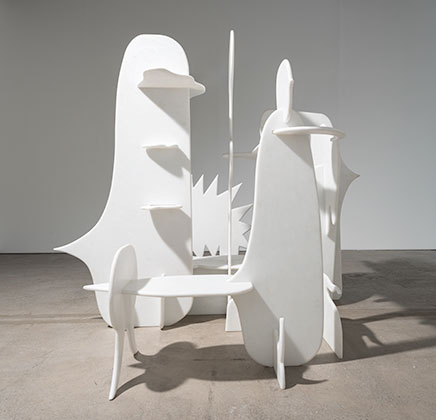
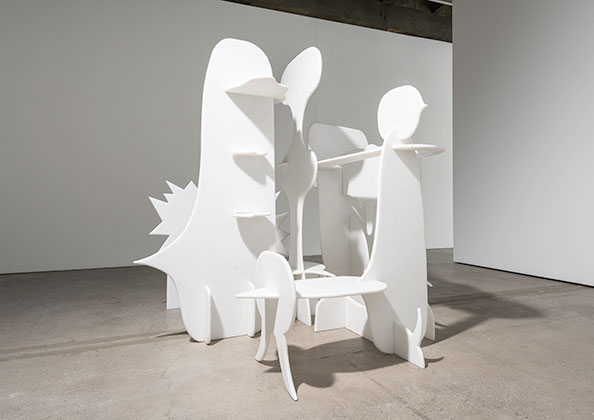
A series of speech bubbles interlocks in the style of a house of cards. Made in marble, these shapes represent voices, opinions, languages, and emotions. A pop allegory of polyphony: whispers or shouts, transmissions or interjections, they support each other as an architecture of speech.
|
||||||||||||||||||||||||||||||||||||
|
2013
|
||||||||||||||||||||||||||||||||||||
|
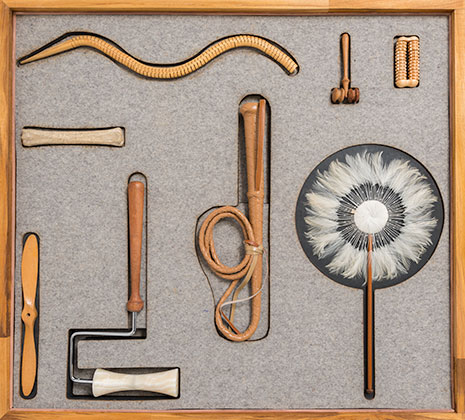
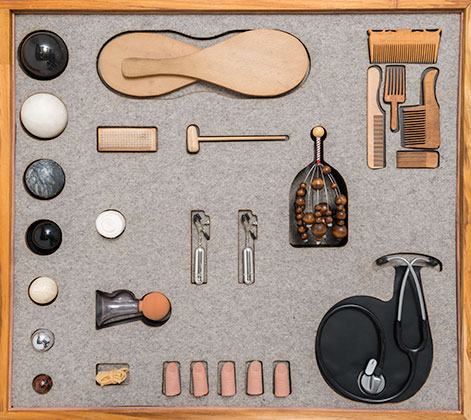
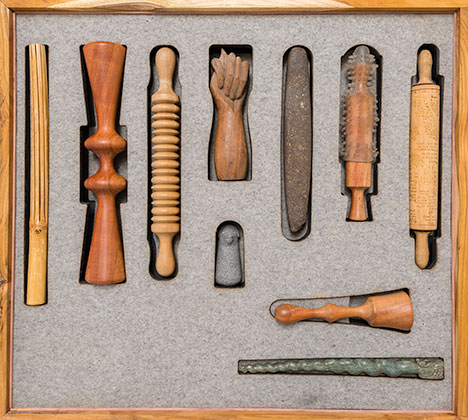
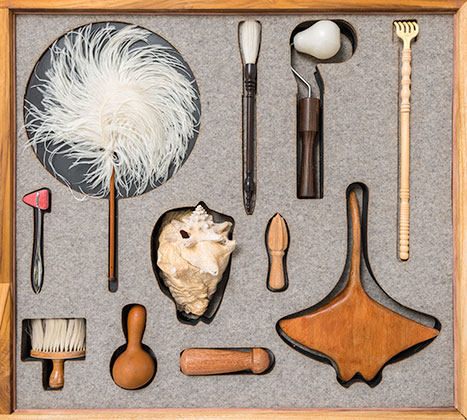
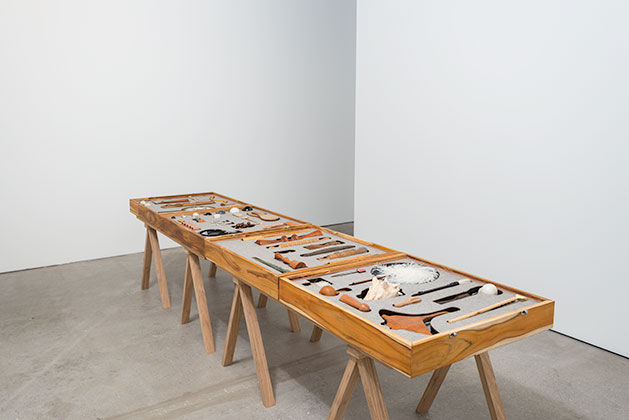
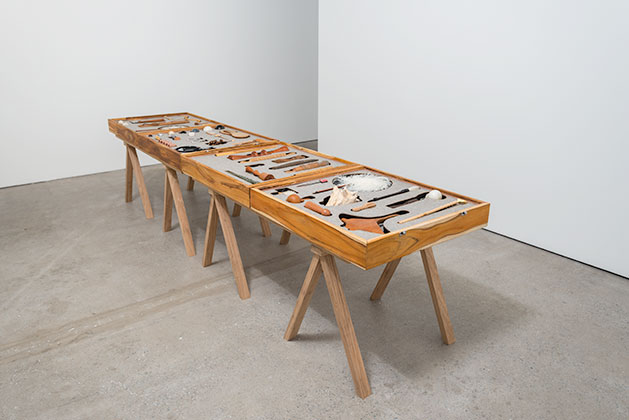
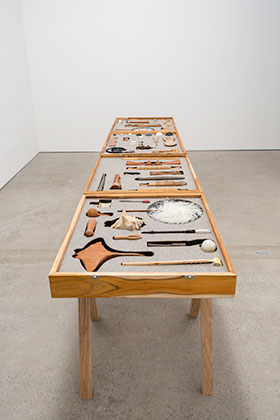
This sculpture may entertain the eye but is meant to be felt and be touched. The work is an inventory of wood, stone, glass, and other materials intended to massage, caress, pinch, stroke, slap, rub, squeeze, pet, and scratch, etcetera. Each of the objects produces a specific sensation that is not only physical but also taps into the memory of things. For instance, the feeling of a stethoscope, a clothespin, a feather, a rubber band, or a rolling pin. A participatory device one uses to “sculpt” a series of tactile sensations with someone else.
|
||||||||||||||||||||||||||||||||||||
|
2013
|
||||||||||||||||||||||||||||||||||||
|
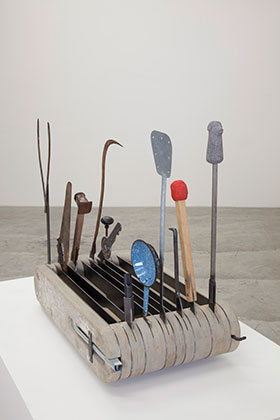
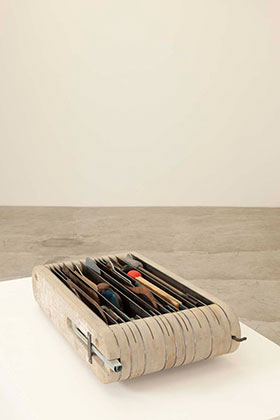
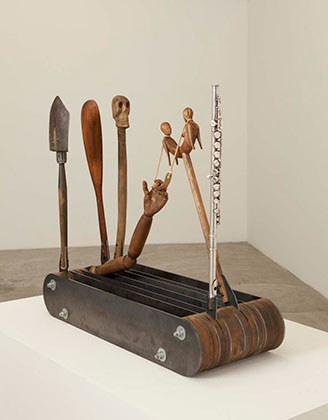
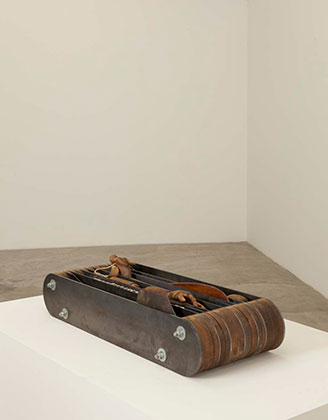
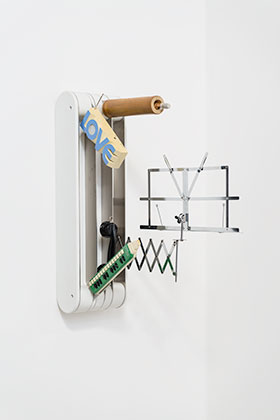
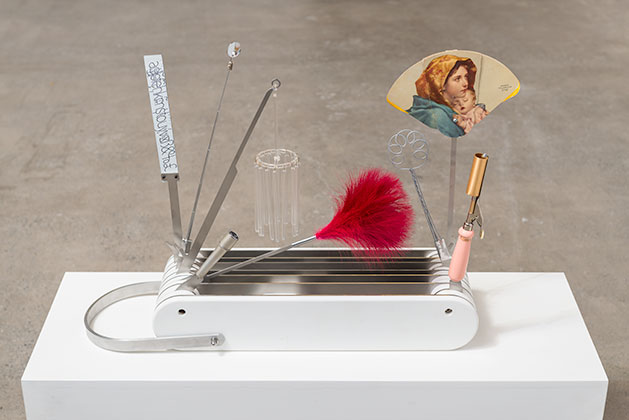
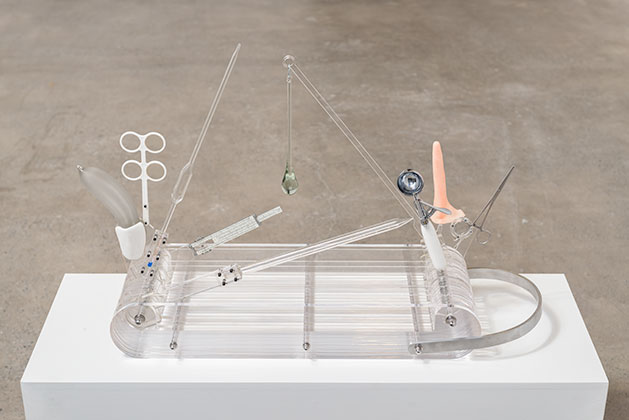
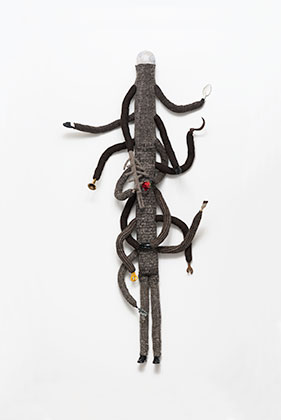
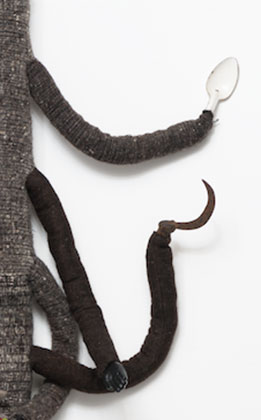
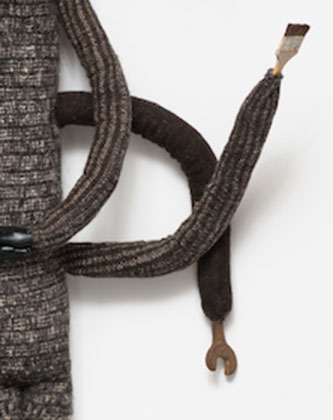
This project is based on the functionality of the Swiss Knife, which is basically a pocket toolbox. Fort he creation of this piece, Reyes searched flea markets in Mexico City and shopped for objects that could be modified, change positions, and can also fit together in a spontaneous juxtaposition. These juxtapositions create a set of meanings and call for new narratives that are the results from the interaction with the public. For instance, and in order to frame the work, one can out out a spoon, a telescope, a flute, or a human bone.
|
||||||||||||||||||||||||||||||||||||
|
2013
|
||||||||||||||||||||||||||||||||||||
|
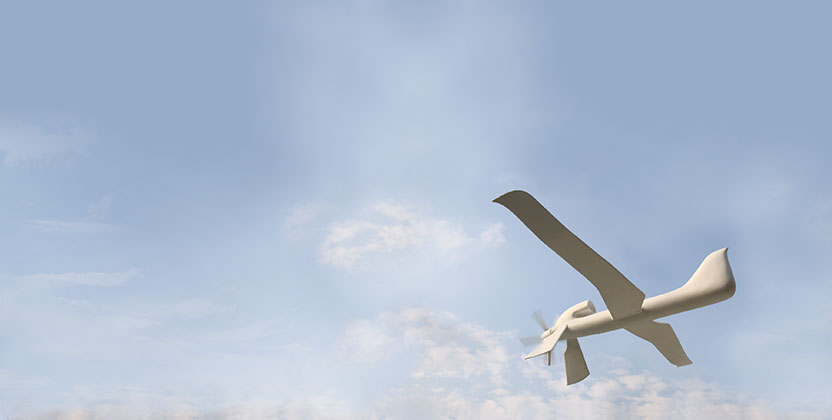
Drone Dove merges the form of an unmanned military drone and a dove of peace. In the past doves were employed to deliver messages or carry small cameras. Since they could fly long distances they were used in similar roles to the ones performed today by unmanned aerial vehicles. Despite the military’s use of doves, we mainly identify them as the essential symbol of peace.
Drone Dove merges the form of an unmanned military drone and a dove of peace. In the past doves were employed to deliver messages or carry small cameras. Since they could fly long distances they were used in similar roles to the ones performed today by unmanned aerial vehicles. Despite the military’s use of doves, we mainly identify them as the essential symbol of peace.
The Drone Dove resembles both the United States Air Force Predator Drone, currently in use for drone attacks, as well as the simple beauty of modern sculptures that depict doves in the postwar twentieth century. Picasso Nogucci. As a symbol, the drone dove is a silent protest urging all governments to stop the use of unmanned vehicles in warfare. We believe that as much as agent orange, napalm and landmines have been rejected, it is within our power to stop the use of ever-more sophisticated killer robots. |
||||||||||||||||||||||||||||||||||||
|
2013
|
||||||||||||||||||||||||||||||||||||
|
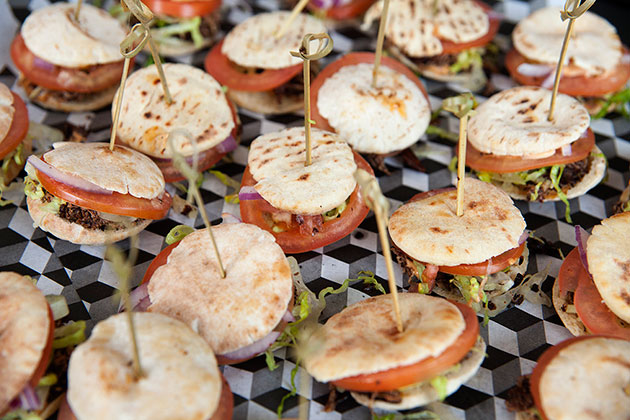
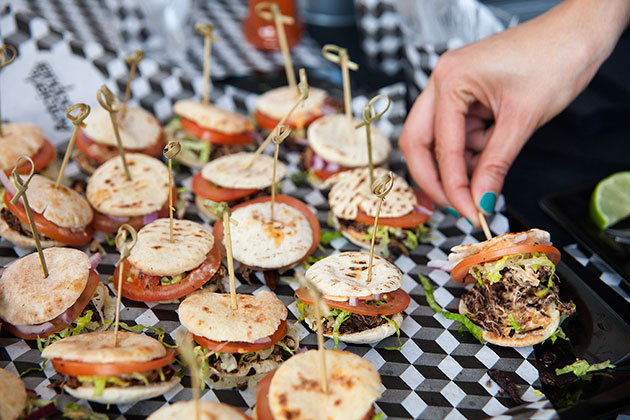
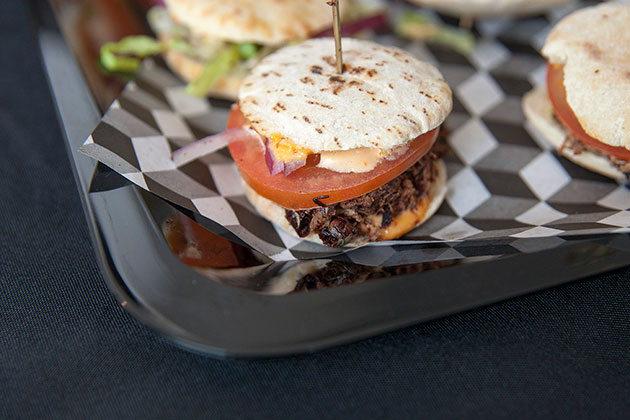
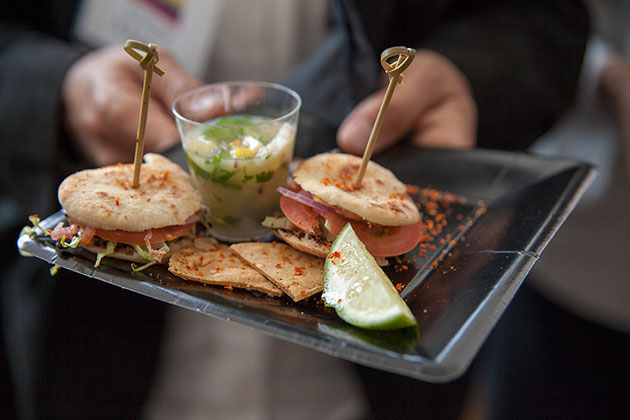
We still need to feed the 7 billion (and counting) earthlings, who are on course to first eat everything on the planet and then eat each other. Entomophagists have devised a new über-food: the grasshopper burger, aka the grass-whopper.
|
||||||||||||||||||||||||||||||||||||
|
2013
|
||||||||||||||||||||||||||||||||||||
|
||||||||||||||||||||||||||||||||||||